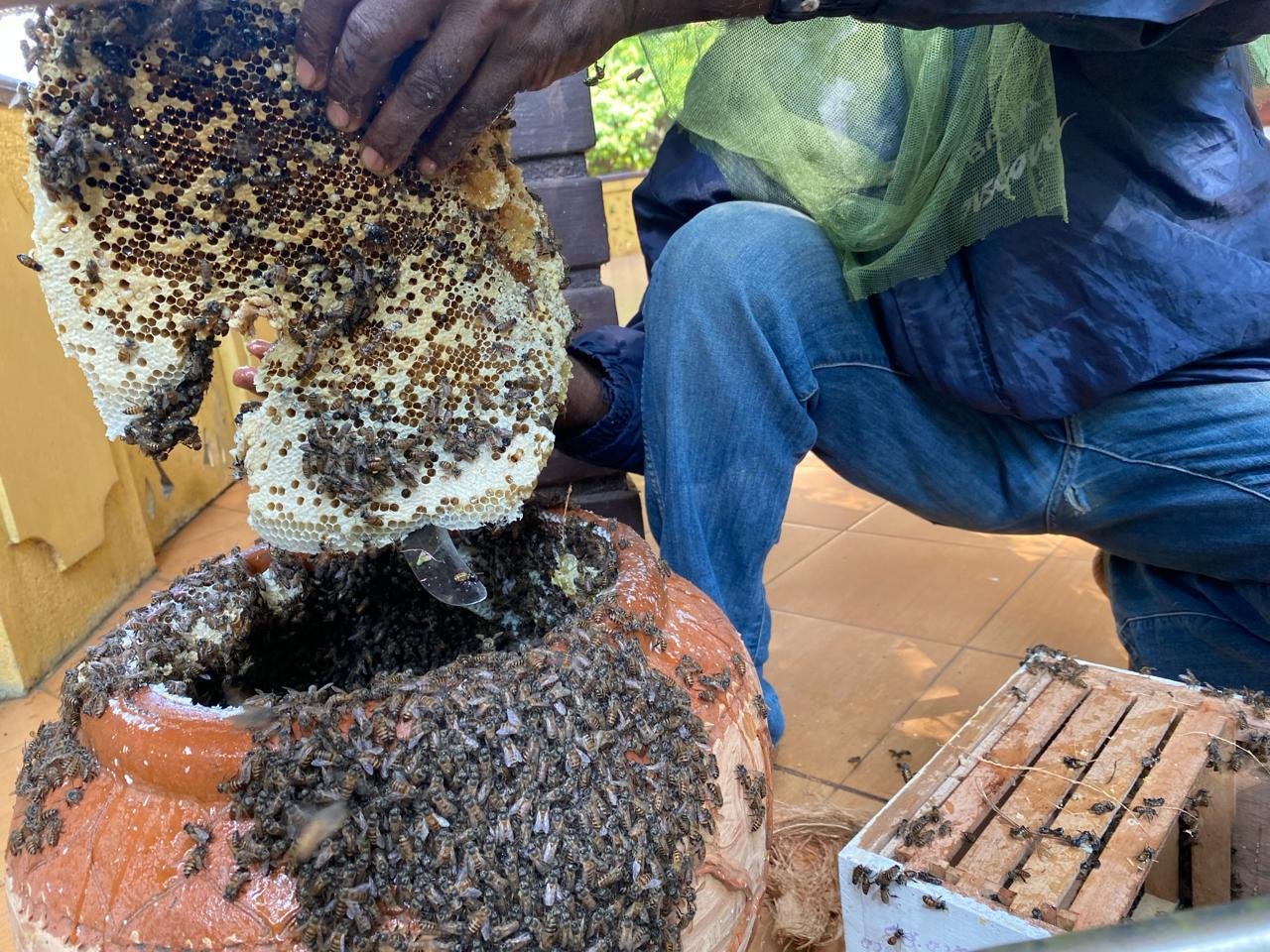
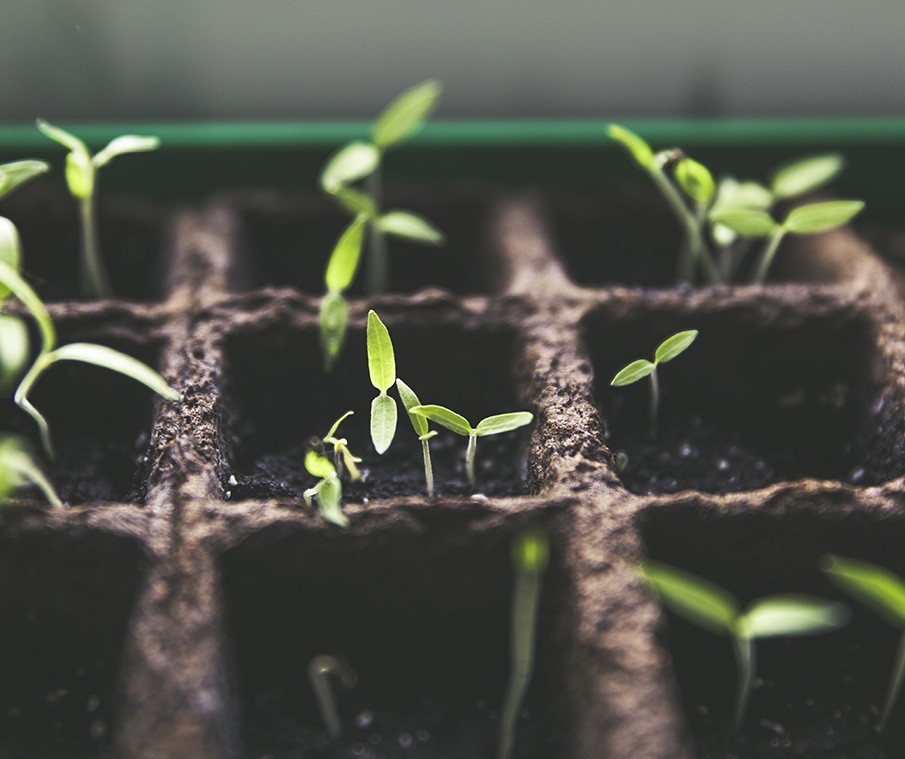
After the pandemic, productive agricultural land in parts of Sri Lanka had been left unused. Twenty Arms worked with local partners to bring a small area back into cultivation, beginning with four acres and expanding to 9.25 acres in the following season.

Returning land to cultivation
The project was built around a straightforward objective: make the land productive again and do it with the involvement of the surrounding community. Local knowledge shaped the work from field preparation through planting and harvest.
The crop programme included Sri Lankan rice varieties such as Kuruluthuda and Suwandel, alongside familiar Samba types. Keeping these varieties in production matters because an origin is defined not only by geography, but also by seed, cultivation practice and the people who know how to work with both.
What the first two seasons delivered
- Employment: the project provided work to 283 people across the first two seasons.
- Cultivated area: production expanded from four acres in the first season to 9.25 acres in the second.
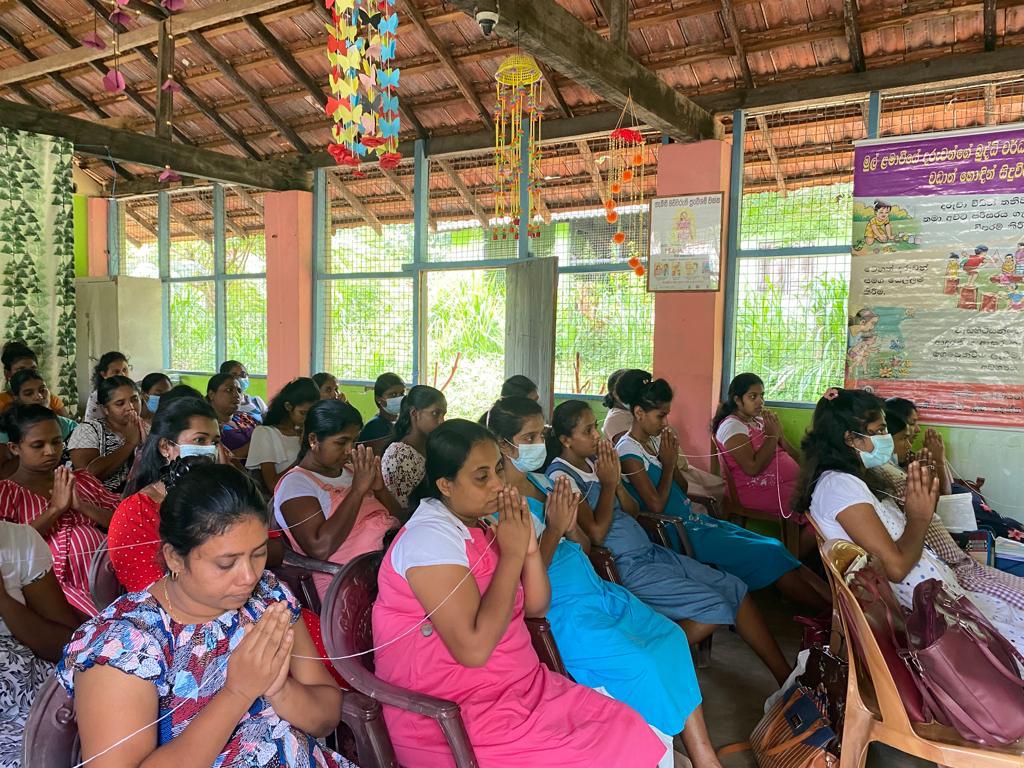
- Community support: direct assistance reached 350 families, with attention to pregnant mothers and children under five.
- Longer-term assets: the programme also supported the construction of a two-bedroom house and the distribution of livestock.
Production methods and origin value
The fields used non-GMO seed and locally familiar natural inputs, including Jeewamrutham. These choices were part of the project’s effort to work with established agricultural knowledge rather than impose a detached production model.
The recorded project value exceeded CA$15,000, or approximately LKR 3.5 million at the time. The important result was not a single headline number. It was the combination of cultivated land, paid work, local crop knowledge and a clearer route from farm activity to a commercially relevant origin.
This remains part of the Twenty Arms story because it explains how we think about origin products: the quality of a commodity and the resilience of its supply chain begin well before the product reaches a buyer.